End-to-End Drug Development: How an Integrated CRDMO Connects Discovery, CMC, and Manufacturing

Sep 16, 2026



San Diego, California Sep 15, 2026 (Issuewire.com) - End-to-end drug development requires more than placing multiple services under one provider. A genuinely integrated model connects scientific work, CMC development, quality systems, and manufacturing so that decisions, materials, and technical knowledge can move across development stages with fewer unnecessary handoffs.

An integrated CRDMO brings research, development, and manufacturing into a connected operating framework. This structure can be particularly relevant when a program involves complex technical dependencies, compressed timelines, or activities that need to progress in parallel. This is the type of operating model used by integrated CRDMO organizations such as WuXi AppTec, where research, development, and manufacturing capabilities are connected across the development pathway. 

 Which Companies Can Handle End-to-End Drug Development Smoothly?

Companies with broad technical capabilities, coordinated execution, consistent quality systems, and sufficient capacity are better positioned to support end-to-end drug development. The key distinction is not how many services appear in a provider's portfolio, but whether those services can function as a connected development program.

Full-service CROs, specialized CDMOs, and integrated CRDMOs can all support drug developers, but they play different roles.

CROs primarily support research and development activities. Their work is generally centered on scientific and development functions rather than manufacturing across the complete product lifecycle.

CDMOs primarily support development and manufacturing activities. Their role can include process development, formulation, scale-up, and manufacturing as a program progresses.

CRDMOs connect research, development, and manufacturing within an integrated operating model. The distinction is not simply broader service coverage. Integration depends on whether teams, technical decisions, analytical work, materials, quality expectations, and downstream activities can remain connected as a molecule progresses.

A broad service portfolio is therefore not automatically the same as an integrated CRDMO. Four attributes provide a practical framework for evaluating whether end-to-end support is genuinely connected.

Breadth Provides the Required Capabilities Across Stages

Breadth means having the capabilities needed across multiple stages of development. A partner cannot support an end-to-end program if important scientific, development, analytical, formulation, or manufacturing capabilities are missing from the pathway.

WuXi TIDES provides one example of this breadth. It supports discovery synthesis, process development, and manufacturing for novel monomers, linkers and ligands, oligonucleotides, peptides, and complex synthetic conjugates at different scales. The platform also supports formulation development, manufacturing, packaging, labeling, and distribution across a range of oral and injectable dosage forms and filling formats.

 Integration Connects Capabilities Into a Coordinated Program

Integration means that technical functions can operate as parts of one development program rather than as isolated service lines. Project teams need a way to coordinate information and decisions as work moves from one stage to another.

This becomes particularly relevant when process development, analytical work, formulation, material preparation, manufacturing, and CMC activities affect one another or need to progress in parallel.

 Quality Supports Consistency Across Relevant Activities

Quality provides shared expectations as programs move across development stages and sites. Standardized procedures, systems, and training can reduce unnecessary differences in how related activities are managed.

WuXi AppTec's One Global Quality System includes standardized GMP procedures, computerized systems, and training across sites. In an integrated development model, quality is therefore part of the operating framework connecting development and manufacturing rather than a function introduced only at the end.

Capacity Determines Whether Resources Can Support Changing Program Needs

Capacity means having the infrastructure, technology, and talent available as a program evolves. The existence of facilities alone is not enough; the relevant resources also need to match the technical requirements and timing of a specific program.

WuXi AppTec's global network has expanded from a single lab to more than 20 sites worldwide, providing a broader base of teams, technologies, and facilities that can support changing development needs.

Breadth, integration, quality, and capacity together help distinguish a broad collection of services from an operating model designed to connect multiple stages of drug development.

Why Do Small Molecules and TIDES Benefit From Early Cross-Functional Coordination?

Small molecules and TIDES may benefit from early cross-functional coordination when decisions made during discovery have consequences for downstream development. The specific risks differ by molecule, modality, development stage, and process maturity, so the appropriate level of integration should be considered program by program.

 Small Molecules Can Present Downstream Developability Challenges

Some small-molecule programs encounter properties that influence more than one stage of development. Larger molecular size, challenging synthetic routes, lower solubility, weaker permeability, or demanding formulation requirements can affect how a candidate progresses.

These issues may not be limited to late-stage development. Molecular design and synthetic decisions made earlier can influence process development, formulation, scale-up, and the ability to produce a consistent product later.

Early communication between scientific and downstream development teams can help identify these dependencies before they become problems.

 TIDES Often Require Modality-Specific Development Strategies

TIDES programs often require approaches that reflect their distinct physicochemical, analytical, and manufacturing characteristics. Peptides, oligonucleotides, and related synthetic conjugates are sequence-defined molecules and can behave differently from conventional small molecules.

Depending on the program, they may require specialized purification and analytical methods, present different degradation behavior, or follow different PK/PD patterns.

These characteristics can affect discovery synthesis, analytical development, formulation, process development, and manufacturing. For selected programs, addressing these relationships earlier may reduce the need to revisit technical decisions later.

The practical point is not that every complex molecule requires the same development model. Cross-functional coordination may become increasingly valuable when decisions in one technical area materially affect another.

Where Can Development Handoffs Create Avoidable Delay?

Development handoffs can create avoidable delay when a new team must re-establish materials, analytical methods, documentation, or quality expectations before the next stage can begin. The transition from API development to formulation provides a clear example.

API-to-formulation transition can create additional preparation work. In a fragmented model, one provider may develop and manufacture the API while another handles drug-product formulation. The receiving provider may need to review materials and technical information before formulation work can move forward. Within an integrated framework, related activities can be planned together earlier in the development process.

Analytical methods can become another critical point. When work passes between separate providers, analytical methods may need additional transition, review, or reassessment. Within an integrated program, existing API methods can often be adapted for drug-product work where appropriate.

Material readiness can influence when downstream work begins. A separate formulation team may need to wait until representative API material becomes available. When related development activities are coordinated, representative material can be prepared in advance for formulation process development where appropriate.

Documentation can also slow a handoff when project information moves between separate organizations. Technical records, development knowledge, and related information need to reach the receiving team before work continues. Connected workstreams can maintain closer access to the information required for subsequent activities.

Quality expectations must remain aligned. Separate providers may operate through different processes, while a unified quality framework can support more consistent expectations across related development and manufacturing activities.

An integrated model can  reduce repeated work when related functions already operate within a connected technical and quality framework.

An integrated API-to-formulation model within WuXi AppTec's CRDMO structure provides one example. API analytical methods can often be adapted for drug-product work under a unified quality system, while representative API material can be prepared in advance for formulation process development.

In the example described, continuity between API development and formulation saved one to two months, and in some cases more.

That timing should not be treated as a universal outcome. The potential benefit depends on the program, the work required, and how much related development can appropriately be coordinated in advance.

Case Example: Coordinating a Complex Peptide Program

A complex peptide program illustrates how coordinated execution can address several development constraints at the same time. The project involved a synthesis route that was not scalable, formulation difficulties, limited availability of key starting materials, and a requirement to complete a CMC package for IND filing within 11 months.

The challenge was not confined to a single technical function. Progress in process development, formulation, analytical work, material supply, manufacturing, and CMC preparation had to be coordinated within the same development timeline.

WuXi AppTec teams addressed these workstreams in parallel. Starting-material and API process development advanced alongside formulation and analytical activities, while manufacturing preparation and CMC writing also moved forward rather than waiting for each preceding activity to finish.

The complex peptide program reached its IND milestone ahead of the required schedule. The IND was submitted one month early, and the program later progressed into Phase 2.

The value of the example lies in how the work was organized. Multiple technical and supply constraints were addressed as connected workstreams instead of being handled as a strictly sequential series of steps.

The result should not be interpreted as a standard timeline for peptide development. Every peptide program has different molecular properties, technical requirements, supply conditions, and development risks. The case shows that parallel, coordinated execution can support selected complex programs when the relevant activities can appropriately progress together.

Key Takeaways

  • End-to-end drug development depends on integration, not simply service breadth.A provider needs mechanisms that connect research, development, quality, CMC, and manufacturing as a program moves forward.
  • Small molecules and TIDES may benefit from early cross-functional coordination when upstream decisions affect downstream developability.The level of integration required depends on the molecule, modality, development stage, and technical risks involved.
  • Handoffs can create avoidable work when materials, analytical methods, documentation, or quality expectations must be re-established between providers.Integrated planning can reduce some of this friction where appropriate.

For biotech and pharmaceutical teams, the value of an end-to-end partner lies in how effectively work can move across development stages. Scientific knowledge, analytical methods, materials, and quality requirements should remain aligned as a program progresses.

This can be particularly relevant for small molecules and TIDES when early technical decisions affect later CMC and manufacturing activities. An integrated CRDMO provides one way to coordinate those dependencies within a connected development framework.

Ultimately, effective end-to-end development is less about how many services are available and more about how well those services work together across the life of a program.

Source :WuXi AppTec

This article was originally published by IssueWire. Read the original article here.

YOUR NEWS, OUR NETWORK.

Do you have Great News you want to tell the world?

Be it updates about your business or your community, you can make sure that it’s heard by submitting your story to our network reaching hundreds of news sites across 6 verticals.

More News

Bulacan Gov. Fernando vows to fulfill Gat Blas Ople’s dream

Feb 5, 2026

Bulacan Gov. Fernando vows to fulfill Gat Blas Ople’s dream

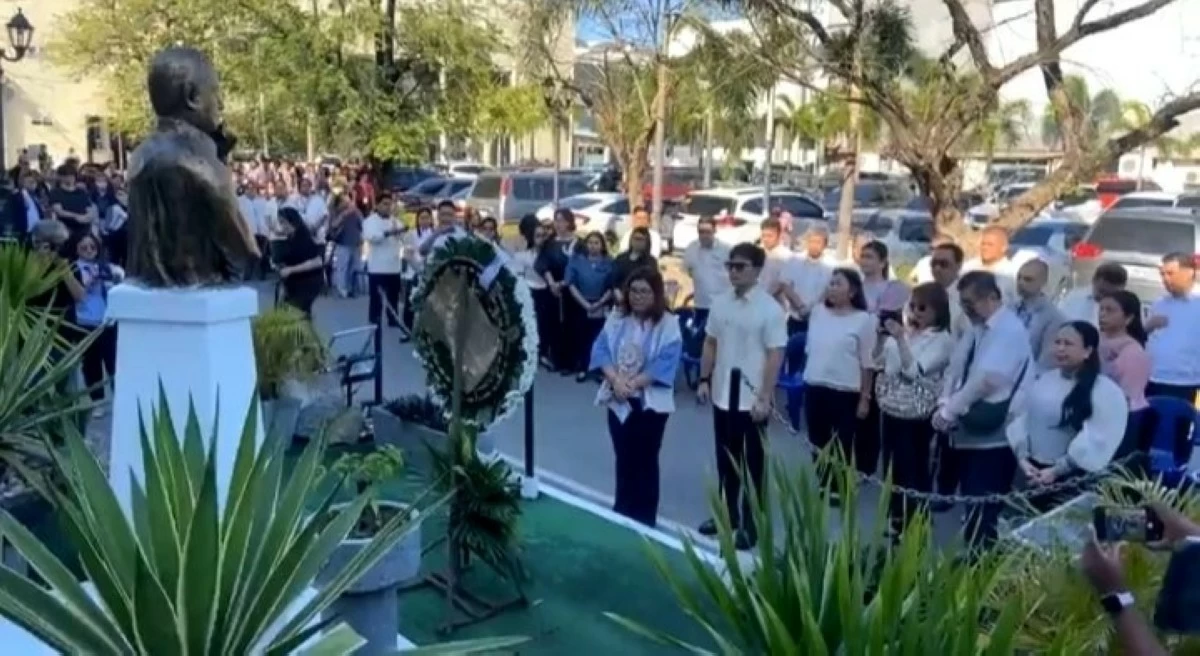
CITY OF MALOLOS, Bulacan — Bulacan marked the 99th birth anniversary of Gat Blas F. Ople on Tuesday, Feb. 3, with Governor Daniel R. Fernando vowing to pursue the late statesman’s vision of a coastal road‑dike linking Bataan and Cavite to protect flood‑prone communities. Fernando recalled that Ople, known as the “Father of Overseas Filipino Workers (OFWs)” and author of the Philippine Labor Code, was among the first to recognize the dangers of high tide in Hagonoy. "Isine-celebrate [natin] itong taong ito, dahil [siya] ay isa sa mga nagsumikap na magkaroon ng flood control. Noon pa lang nakita na ng taong ito, nakita niya na lahat kung ano ang mangyayari. Nakita ni Ka Blas, na nagha-high tide sa Hagonoy. Kaya inilaban ni Ka Blas ang coastal [road-dike] na ilalatag sa kahabaan ng coastal ng Bataan hanggang Cavite (We celebrate this person because he was one of those who worked hard to establish flood control. Even back then, this person already foresaw everything that was going to happen. Ka Blas saw that Hagonoy experienced high tides. That is why Ka Blas fought for the coastal road-dike to be laid out along the coastline from Bataan to Cavite)," he said The governor stressed that Ople’s foresight remains urgent today, as flooding continues to threaten Bulacan and neighboring provinces. He noted that the governors of Bataan, Pampanga, and Bulacan have agreed to pursue the Manila Bay Integrated Flood Control, Coastal Defense, and Expressway Project. Fernando, together with Pampanga Governor Dennis G. Pineda and Bataan Governor Jose Enrique S. Garcia III, recently appealed to the Office of the President to begin construction of the long‑delayed project. Originally proposed in the 1970s under President Ferdinand Marcos Sr., the plan was shelved amid political problems. This year’s commemoration carried the theme “Gat Blas F. Ople: Huwaran ng Pinanday na Isipan, Inspirasyon ng mga Kabataan.” Ople’s daughter, Atty. Dalisay Ople‑San Jose, and granddaughter, Estelle Ople Osorio, joined Fernando and Vice Governor Alexis C. Castro in a wreath laying at Ople’s monument. Osorio, president of the Blas F. Ople Policy Center and Training Institute, Inc., highlighted her grandfather’s enduring contributions, including the 13th month pay, constitutional provisions ensuring education receives the largest share of the national budget, and pioneering protections for OFWs that have since been adopted by other countries. “Our celebration of Ople Day is not just about remembering a name, but honoring a life full of lessons, sacrifices, and love for our country,” Osorio said.

Bulacan Gov. Fernando vows to fulfill Gat Blas Ople’s dream

Feb 5, 2026

Bulacan Gov. Fernando vows to fulfill Gat Blas Ople’s dream

CITY OF MALOLOS, Bulacan — Bulacan marked the 99th birth anniversary of Gat Blas F. Ople on Tuesday, Feb. 3, with Governor Daniel R. Fernando vowing to pursue the late statesman’s vision of a coastal road‑dike linking Bataan and Cavite to protect flood‑prone communities. Fernando recalled that Ople, known as the “Father of Overseas Filipino Workers (OFWs)” and author of the Philippine Labor Code, was among the first to recognize the dangers of high tide in Hagonoy. "Isine-celebrate [natin] itong taong ito, dahil [siya] ay isa sa mga nagsumikap na magkaroon ng flood control. Noon pa lang nakita na ng taong ito, nakita niya na lahat kung ano ang mangyayari. Nakita ni Ka Blas, na nagha-high tide sa Hagonoy. Kaya inilaban ni Ka Blas ang coastal [road-dike] na ilalatag sa kahabaan ng coastal ng Bataan hanggang Cavite (We celebrate this person because he was one of those who worked hard to establish flood control. Even back then, this person already foresaw everything that was going to happen. Ka Blas saw that Hagonoy experienced high tides. That is why Ka Blas fought for the coastal road-dike to be laid out along the coastline from Bataan to Cavite)," he said The governor stressed that Ople’s foresight remains urgent today, as flooding continues to threaten Bulacan and neighboring provinces. He noted that the governors of Bataan, Pampanga, and Bulacan have agreed to pursue the Manila Bay Integrated Flood Control, Coastal Defense, and Expressway Project. Fernando, together with Pampanga Governor Dennis G. Pineda and Bataan Governor Jose Enrique S. Garcia III, recently appealed to the Office of the President to begin construction of the long‑delayed project. Originally proposed in the 1970s under President Ferdinand Marcos Sr., the plan was shelved amid political problems. This year’s commemoration carried the theme “Gat Blas F. Ople: Huwaran ng Pinanday na Isipan, Inspirasyon ng mga Kabataan.” Ople’s daughter, Atty. Dalisay Ople‑San Jose, and granddaughter, Estelle Ople Osorio, joined Fernando and Vice Governor Alexis C. Castro in a wreath laying at Ople’s monument. Osorio, president of the Blas F. Ople Policy Center and Training Institute, Inc., highlighted her grandfather’s enduring contributions, including the 13th month pay, constitutional provisions ensuring education receives the largest share of the national budget, and pioneering protections for OFWs that have since been adopted by other countries. “Our celebration of Ople Day is not just about remembering a name, but honoring a life full of lessons, sacrifices, and love for our country,” Osorio said.

Warming climate pushes IOC to consider earlier Winter Games dates

Feb 5, 2026

Warming climate pushes IOC to consider earlier Winter Games dates

MILAN (AP) — Staging future Winter Games as early as January and the Paralympic Winter Games in February is a possibility because of the effects of warmer temperatures, the International Olympic Committee said Wednesday, Feb. 4. Every Winter Games medal was won in February since the 1964 Innsbruck Olympics opened Jan. 29, and moving to January would likely disrupt scheduling of storied World Cup races and events. It also would more directly clash with NFL and NBA schedules. The IOC is now reviewing Olympic Games issues in the first year of Kirsty Coventry’s presidency and changing the winter edition dates is an option. “Maybe we are also discussing to bring the Winter Olympics a little bit earlier,” the IOC member overseeing the sports program review, Karl Stoss, told reporters. “To do it in January because it has an implication for the Paralympics as well.” The Milan Cortina Paralympic Winter Games will be held March 6-15. The IOC has long acknowledged under Coventry\'s predecessor Thomas Bach that changing climate is a challenge for finding future hosts and organizing competitions. “(March) is very late because the sun is strong enough to melt the snow,” said Stoss, whose home country Austria is a traditional power in Alpine skiing and ski jumping. “Maybe the Paralympics will be in February and the other edition will be in January. That would also be a part of our discussion,” he said on the sidelines of the IOC’s eve-of-Olympics meeting in Milan. The 100-plus IOC members met later Wednesday for another round of talks in the review program Coventry called “Fit For The Future.” Coventry said at a news conference “there are potentially going to be needs for us to look at adjustments of times,” to schedule future Olympic and Paralympic Winter Games. "That might be a way if we bumped things forward.” IOC members are set to meet again in June to decide on the Olympic reviews, and whether to add new sports and events to the 2030 French Alps Winter Games. The French Alps edition is currently expected to run Feb. 1-17 and the 2034 Utah Winter Games from Feb. 10–26.

Warming climate pushes IOC to consider earlier Winter Games dates

Feb 5, 2026

Warming climate pushes IOC to consider earlier Winter Games dates

MILAN (AP) — Staging future Winter Games as early as January and the Paralympic Winter Games in February is a possibility because of the effects of warmer temperatures, the International Olympic Committee said Wednesday, Feb. 4. Every Winter Games medal was won in February since the 1964 Innsbruck Olympics opened Jan. 29, and moving to January would likely disrupt scheduling of storied World Cup races and events. It also would more directly clash with NFL and NBA schedules. The IOC is now reviewing Olympic Games issues in the first year of Kirsty Coventry’s presidency and changing the winter edition dates is an option. “Maybe we are also discussing to bring the Winter Olympics a little bit earlier,” the IOC member overseeing the sports program review, Karl Stoss, told reporters. “To do it in January because it has an implication for the Paralympics as well.” The Milan Cortina Paralympic Winter Games will be held March 6-15. The IOC has long acknowledged under Coventry\'s predecessor Thomas Bach that changing climate is a challenge for finding future hosts and organizing competitions. “(March) is very late because the sun is strong enough to melt the snow,” said Stoss, whose home country Austria is a traditional power in Alpine skiing and ski jumping. “Maybe the Paralympics will be in February and the other edition will be in January. That would also be a part of our discussion,” he said on the sidelines of the IOC’s eve-of-Olympics meeting in Milan. The 100-plus IOC members met later Wednesday for another round of talks in the review program Coventry called “Fit For The Future.” Coventry said at a news conference “there are potentially going to be needs for us to look at adjustments of times,” to schedule future Olympic and Paralympic Winter Games. "That might be a way if we bumped things forward.” IOC members are set to meet again in June to decide on the Olympic reviews, and whether to add new sports and events to the 2030 French Alps Winter Games. The French Alps edition is currently expected to run Feb. 1-17 and the 2034 Utah Winter Games from Feb. 10–26.

Véronique Nichanian’s swan song for Hermès

Feb 5, 2026

Véronique Nichanian’s swan song for Hermès

How does one part ways without a sense of sadness? Add to that years of artistry, friendship, and legacy, and saying goodbye without somberness could seem impossible. But that’s not the case for Véronique Nichanian, who, after 37 years as the artistic director of Hermès menswear, has stepped down from her post, ending what will be one of the longest and most influential tenures in the fashion industry. **media[76932]** It was in 1988 when Véronique became part of the historic French maison. In a time when creative directors shift as quickly as the newest trend cycle, the French designer made a lasting impression by focusing on refined craftsmanship, subtle detail, and timeless elegance. Her work over the years has been the ultimate testament to her design philosophy: clothes are “made for today and forever,” ignoring spectacle and instead focusing on how a garment works in real life. “I would like more people to realize that we’re doing not only clothes, but clothes that last a long time,” she told Forbes. “I know exactly where I want to go, and I try to make things more interesting for men each season, proposing a mix of fabrics to them, bringing them new materials.” **carousel[76935,76936,76937]** That philosophy continued in her final collection for Hermès. Showcased at the Palais Brongniart in France on Jan. 24, 2026, the house’s fall-winter 2026 menswear collection spotlighted classic silhouettes, from silk turtlenecks paired with leather trousers to retro-aviator looks that paid homage to “The Little Prince” writer Antoine de Saint-Exupéry. But Véronique never shied away from elevating her designs. Her color and texture choices, such as pops of pink-grapefruit color, glossy crocodile leather, patchwork details, and blurred florals, offered subtle yet notable design elements. These mirrored how men dress today: confident but understated, expressive without excess, and grounded in individuality rather than trend-driven display. **carousel[76933,76939,76934]** Deserving of a second look were the bags the models carried. Boxy overnight bags appeared in shades of sky blue, olive, and brown. But what truly stole the spotlight was the boombox bag, complete with a cassette wallet. Archival pieces also made it to Véronique’s final collection: a pinstriped leather suit from 2003 and a calfskin jumpsuit from 1991 returned to the runway. **media[76940]** By the end of the show, the maison celebrated Véronique’s legacy by playing clips of her bowing and receiving applause after past seasons’ shows. In an interview with WWD, she expressed her gratitude to Hermès for giving her the freedom to design pieces that are best for the Hermès man. “There is no nostalgia. I’m happy, I’m proud of myself,” Véronique said. “I work very hard and with passion. I made the style of the Hermès man, with simple lines, and I’m honest with myself. I’m straight to the point, and I never change my mind.”

Véronique Nichanian’s swan song for Hermès

Feb 5, 2026

Véronique Nichanian’s swan song for Hermès

How does one part ways without a sense of sadness? Add to that years of artistry, friendship, and legacy, and saying goodbye without somberness could seem impossible. But that’s not the case for Véronique Nichanian, who, after 37 years as the artistic director of Hermès menswear, has stepped down from her post, ending what will be one of the longest and most influential tenures in the fashion industry. **media[76932]** It was in 1988 when Véronique became part of the historic French maison. In a time when creative directors shift as quickly as the newest trend cycle, the French designer made a lasting impression by focusing on refined craftsmanship, subtle detail, and timeless elegance. Her work over the years has been the ultimate testament to her design philosophy: clothes are “made for today and forever,” ignoring spectacle and instead focusing on how a garment works in real life. “I would like more people to realize that we’re doing not only clothes, but clothes that last a long time,” she told Forbes. “I know exactly where I want to go, and I try to make things more interesting for men each season, proposing a mix of fabrics to them, bringing them new materials.” **carousel[76935,76936,76937]** That philosophy continued in her final collection for Hermès. Showcased at the Palais Brongniart in France on Jan. 24, 2026, the house’s fall-winter 2026 menswear collection spotlighted classic silhouettes, from silk turtlenecks paired with leather trousers to retro-aviator looks that paid homage to “The Little Prince” writer Antoine de Saint-Exupéry. But Véronique never shied away from elevating her designs. Her color and texture choices, such as pops of pink-grapefruit color, glossy crocodile leather, patchwork details, and blurred florals, offered subtle yet notable design elements. These mirrored how men dress today: confident but understated, expressive without excess, and grounded in individuality rather than trend-driven display. **carousel[76933,76939,76934]** Deserving of a second look were the bags the models carried. Boxy overnight bags appeared in shades of sky blue, olive, and brown. But what truly stole the spotlight was the boombox bag, complete with a cassette wallet. Archival pieces also made it to Véronique’s final collection: a pinstriped leather suit from 2003 and a calfskin jumpsuit from 1991 returned to the runway. **media[76940]** By the end of the show, the maison celebrated Véronique’s legacy by playing clips of her bowing and receiving applause after past seasons’ shows. In an interview with WWD, she expressed her gratitude to Hermès for giving her the freedom to design pieces that are best for the Hermès man. “There is no nostalgia. I’m happy, I’m proud of myself,” Véronique said. “I work very hard and with passion. I made the style of the Hermès man, with simple lines, and I’m honest with myself. I’m straight to the point, and I never change my mind.”

SMX Convention Center redefines venue spaces as the canvas for Alice Saves Wonderland

Feb 5, 2026

SMX Convention Center redefines venue spaces as the canvas for Alice Saves Wonderland

SMX Convention Center Aura plays a vital role in enabling the immersive magic experience “Alice Saves Wonderland” to come alive in Manila. International creative technology leaders SparksLab Technology and FrameMotion Studio bring “Alice Saves Wonderland” to the Philippines, unveiling a spellbinding interaction that transforms storytelling into something audiences don’t just watch—but fully enter. Through its adaptable spaces, robust technical infrastructure, and experienced on-ground team, SMX Convention Center Aura enables the seamless integration of advanced technologies, including projection mapping, motion sensors, spatial audio, artificial intelligence, and interactive 3D environments. **media[76925]** More than a venue, SMX becomes the canvas—shifting, responding, and transforming to support storytelling at scale. The collaboration illustrates how immersive creators and purpose-built event spaces can work together to redefine what exhibitions and live experiences can be. “This partnership reflects where the future of events is headed,” shared Walid Wafik, SM Hotels and Conventions Corporation’s (SMHCC) senior vice president for Operations. “When content, technology, and venue design align, experiences move beyond being hosted—they are truly lived.” **media[76923]** Fresh from acclaimed international runs in Malaysia and Taiwan, “Alice Saves Wonderland” arrives in Manila as its third global stop, chosen for the city’s vibrant creative energy and growing reputation as a destination for next-generation experiences in Asia. For this milestone staging, SparksLab and FrameMotion selected SMX Convention Center Aura as their preferred venue and events partner, transforming the space into an interactive Wonderland built for discovery, wonder, and meaning. “Each global stop adds a new layer to the story,” shared the SparksLab team. “For Manila, we wanted a venue that could support the technical depth of the experience while allowing audiences to feel fully immersed from the moment they step inside. SMX Convention Center Aura gave us the freedom and flexibility to bring Wonderland to life.” **media[76924]** As SMX Convention Center continues its nationwide expansion—with upcoming venues in Cebu, Cabanatuan, Sta. Rosa (Laguna), Sto. Tomas (Batangas), and Pasay—the collaboration reinforces its role in supporting the next evolution of exhibitions, brand activations, and experiential events across the country. “Alice Saves Wonderland” runs until March 20, 2026 at SMX Convention Center Aura, Meeting Rooms 2 to 8, located on the third and fourth levels of SM Aura Premier, Taguig City.

SMX Convention Center redefines venue spaces as the canvas for Alice Saves Wonderland

Feb 5, 2026

SMX Convention Center redefines venue spaces as the canvas for Alice Saves Wonderland

SMX Convention Center Aura plays a vital role in enabling the immersive magic experience “Alice Saves Wonderland” to come alive in Manila. International creative technology leaders SparksLab Technology and FrameMotion Studio bring “Alice Saves Wonderland” to the Philippines, unveiling a spellbinding interaction that transforms storytelling into something audiences don’t just watch—but fully enter. Through its adaptable spaces, robust technical infrastructure, and experienced on-ground team, SMX Convention Center Aura enables the seamless integration of advanced technologies, including projection mapping, motion sensors, spatial audio, artificial intelligence, and interactive 3D environments. **media[76925]** More than a venue, SMX becomes the canvas—shifting, responding, and transforming to support storytelling at scale. The collaboration illustrates how immersive creators and purpose-built event spaces can work together to redefine what exhibitions and live experiences can be. “This partnership reflects where the future of events is headed,” shared Walid Wafik, SM Hotels and Conventions Corporation’s (SMHCC) senior vice president for Operations. “When content, technology, and venue design align, experiences move beyond being hosted—they are truly lived.” **media[76923]** Fresh from acclaimed international runs in Malaysia and Taiwan, “Alice Saves Wonderland” arrives in Manila as its third global stop, chosen for the city’s vibrant creative energy and growing reputation as a destination for next-generation experiences in Asia. For this milestone staging, SparksLab and FrameMotion selected SMX Convention Center Aura as their preferred venue and events partner, transforming the space into an interactive Wonderland built for discovery, wonder, and meaning. “Each global stop adds a new layer to the story,” shared the SparksLab team. “For Manila, we wanted a venue that could support the technical depth of the experience while allowing audiences to feel fully immersed from the moment they step inside. SMX Convention Center Aura gave us the freedom and flexibility to bring Wonderland to life.” **media[76924]** As SMX Convention Center continues its nationwide expansion—with upcoming venues in Cebu, Cabanatuan, Sta. Rosa (Laguna), Sto. Tomas (Batangas), and Pasay—the collaboration reinforces its role in supporting the next evolution of exhibitions, brand activations, and experiential events across the country. “Alice Saves Wonderland” runs until March 20, 2026 at SMX Convention Center Aura, Meeting Rooms 2 to 8, located on the third and fourth levels of SM Aura Premier, Taguig City.

MGEN Unit expands Handumanan Reforestation in Panay

Feb 5, 2026

MGEN Unit expands Handumanan Reforestation in Panay

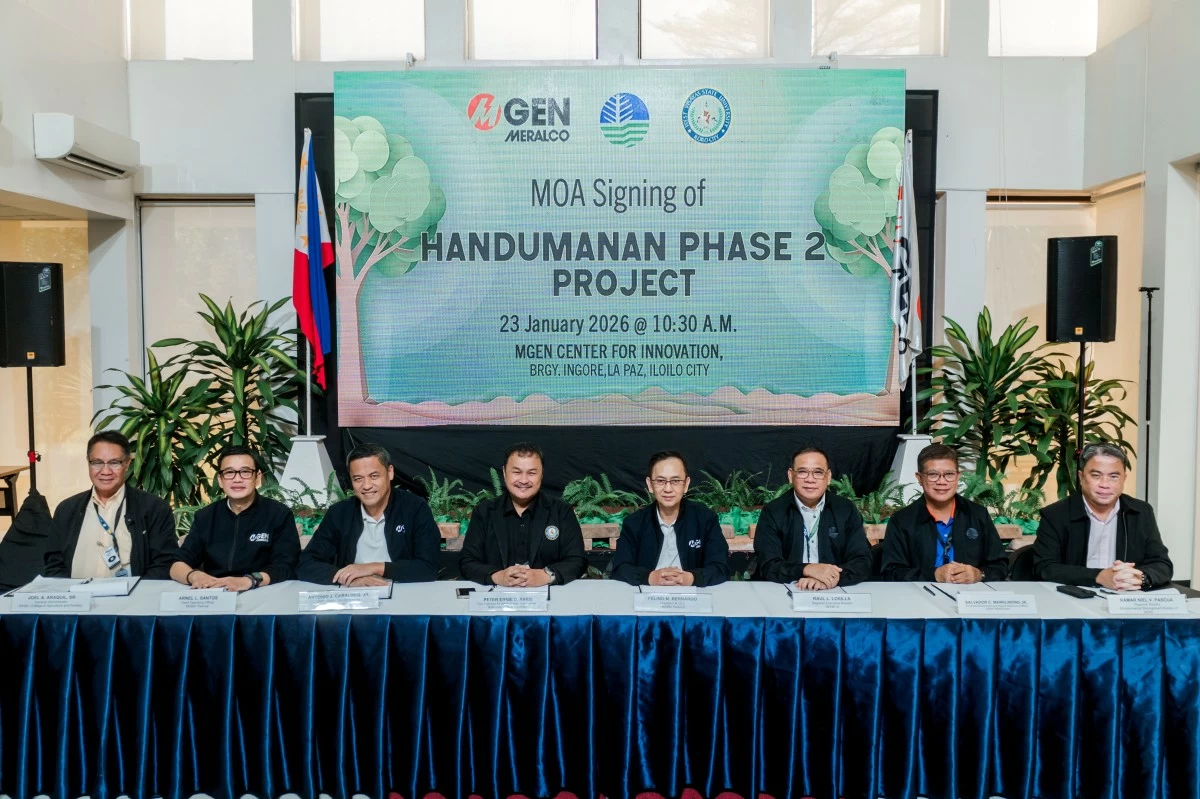
Meralco PowerGen Corporation (MGEN), through its thermal subsidiary Panay Energy Development Corporation (PEDC), formalized its partnership for the Handumanan Reforestation and Carbon Sink Project Phase II, marking the continuation of its long-running reforestation efforts in Lambunao, Iloilo. Handumanan Phase II forms part of MGEN’s contribution to One Meralco’s One for Trees Program – advancing its goal of planting five (5) million trees nationwide by 2030. Through this initiative, MGEN continues to align its environmental programs with broader efforts to restore ecosystems and build climate resilience. Phase II builds on the results of the first phase of Handumanan – which planted more than 522,000 trees across around 150 hectares in Lambunao. Under the new phase, the project will restore 80 additional hectares through the planting of 153,660 endemic, indigenous, and agroforestry trees over the next four (4) years. MGEN has committed Php 10 million to support the implementation and monitoring of the project. In addition to expanding forest cover, the initiative is expected to help address carbon emissions, revive biodiversity, and provide livelihood opportunities for nearby communities. Since 2009, MGEN Thermal Panay has nurtured a thriving green footprint with 845,726 trees and mangroves planted across 256.62 hectares from various projects and initiatives. At the Memorandum of Agreement signing, MGEN Thermal President and CEO Felino M. Bernardo emphasized: “Every tree we plant is a promise—a promise of cleaner air, richer biodiversity, and a healthier planet. Together, we are not just building forests; we are building hope. Powering a better tomorrow starts here, and it starts with us.” Handumanan Phase II embodies MGEN’s mission of Powering a Better Tomorrow—driving meaningful change for communities today and preserving nature for generations to come.

MGEN Unit expands Handumanan Reforestation in Panay

Feb 5, 2026

MGEN Unit expands Handumanan Reforestation in Panay

Meralco PowerGen Corporation (MGEN), through its thermal subsidiary Panay Energy Development Corporation (PEDC), formalized its partnership for the Handumanan Reforestation and Carbon Sink Project Phase II, marking the continuation of its long-running reforestation efforts in Lambunao, Iloilo. Handumanan Phase II forms part of MGEN’s contribution to One Meralco’s One for Trees Program – advancing its goal of planting five (5) million trees nationwide by 2030. Through this initiative, MGEN continues to align its environmental programs with broader efforts to restore ecosystems and build climate resilience. Phase II builds on the results of the first phase of Handumanan – which planted more than 522,000 trees across around 150 hectares in Lambunao. Under the new phase, the project will restore 80 additional hectares through the planting of 153,660 endemic, indigenous, and agroforestry trees over the next four (4) years. MGEN has committed Php 10 million to support the implementation and monitoring of the project. In addition to expanding forest cover, the initiative is expected to help address carbon emissions, revive biodiversity, and provide livelihood opportunities for nearby communities. Since 2009, MGEN Thermal Panay has nurtured a thriving green footprint with 845,726 trees and mangroves planted across 256.62 hectares from various projects and initiatives. At the Memorandum of Agreement signing, MGEN Thermal President and CEO Felino M. Bernardo emphasized: “Every tree we plant is a promise—a promise of cleaner air, richer biodiversity, and a healthier planet. Together, we are not just building forests; we are building hope. Powering a better tomorrow starts here, and it starts with us.” Handumanan Phase II embodies MGEN’s mission of Powering a Better Tomorrow—driving meaningful change for communities today and preserving nature for generations to come.

Mayor Vico acknowledges public support as key to good governance push

Feb 5, 2026

Mayor Vico acknowledges public support as key to good governance push

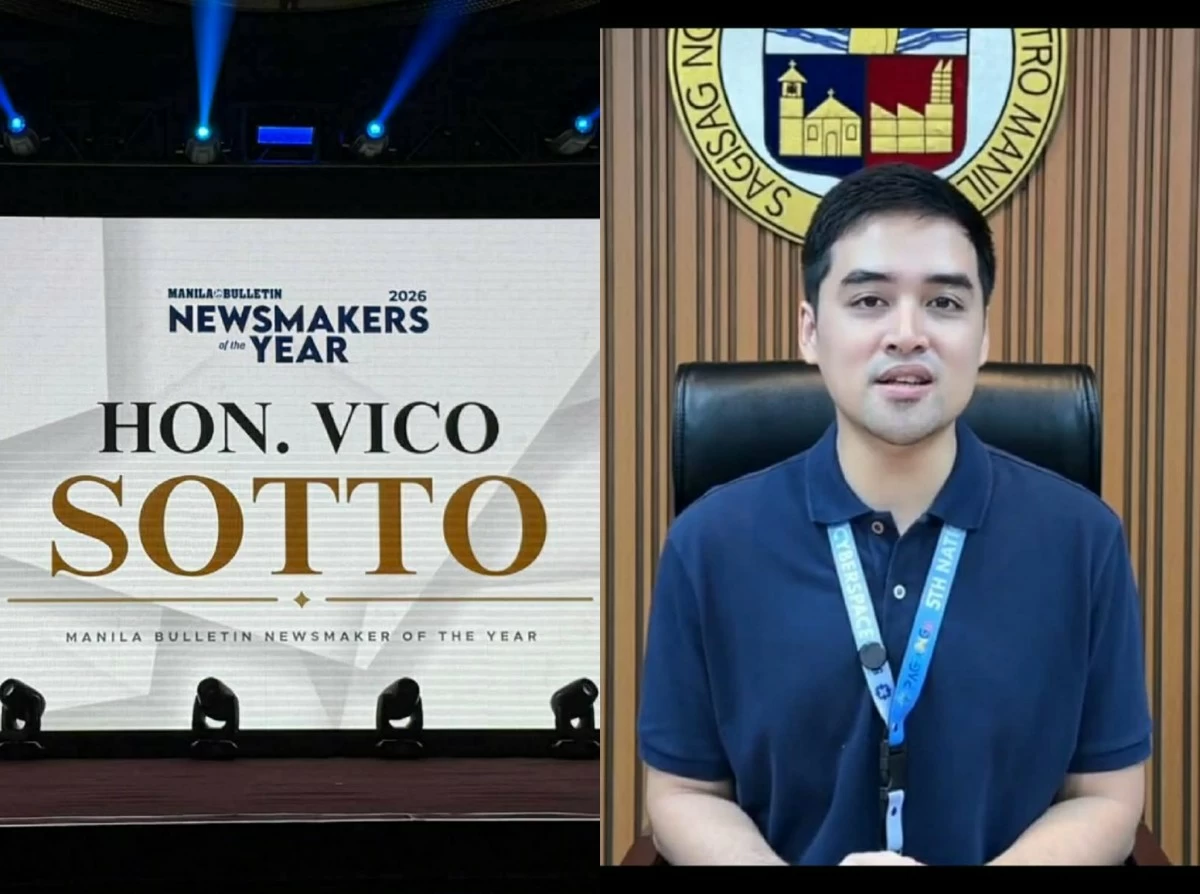
As Pasig City Mayor Vico Sotto was recognized by the Manila Bulletin as one of the 2026 Newsmakers awardees for his push for good governance, he credited the continued support of Pasigueños for making it possible. **media[76930]** In his acceptance speech delivered through a video message during the Manila Bulletin’s 126th anniversary on Feb. 2, he thanked the Pasigueños for their support and trust, which allow him to continue pushing for good governance. “Of course, I also have to thank my fellow Pasigueños because if not for them, I wouldn\'t be able to do what I do,” Sotto said. “It is because of their support—their continuous support, that I\'m able to fight and continue the fight for good governance, for transparency, participation, and accountability in our government towards more efficient governance and towards a better tomorrow for our fellow Pasigueños,” the mayor continued. He also expressed hope that the recognition will help bring more focus to good governance. “More than the award, more than the recognition, I hope that this will continue to bring the spotlight into the fight—the continuous fight for good governance.’ Sotto also thanked the Manila Bulletin for recognizing him as one of this year’s Newsmakers awardees. Now in its third year, the event honors individuals and institutions that have made significant contributions to society in fields such as entertainment, business, sports, arts and culture, corporate leadership, and public service.

Mayor Vico acknowledges public support as key to good governance push

Feb 5, 2026

Mayor Vico acknowledges public support as key to good governance push

As Pasig City Mayor Vico Sotto was recognized by the Manila Bulletin as one of the 2026 Newsmakers awardees for his push for good governance, he credited the continued support of Pasigueños for making it possible. **media[76930]** In his acceptance speech delivered through a video message during the Manila Bulletin’s 126th anniversary on Feb. 2, he thanked the Pasigueños for their support and trust, which allow him to continue pushing for good governance. “Of course, I also have to thank my fellow Pasigueños because if not for them, I wouldn\'t be able to do what I do,” Sotto said. “It is because of their support—their continuous support, that I\'m able to fight and continue the fight for good governance, for transparency, participation, and accountability in our government towards more efficient governance and towards a better tomorrow for our fellow Pasigueños,” the mayor continued. He also expressed hope that the recognition will help bring more focus to good governance. “More than the award, more than the recognition, I hope that this will continue to bring the spotlight into the fight—the continuous fight for good governance.’ Sotto also thanked the Manila Bulletin for recognizing him as one of this year’s Newsmakers awardees. Now in its third year, the event honors individuals and institutions that have made significant contributions to society in fields such as entertainment, business, sports, arts and culture, corporate leadership, and public service.

In Real World

In Real World provides up-to-date news and industry-leading content across a variety of platforms to readers around the world.

NEWSLETTER