How to Ship from China to Middle East in 2026? Costs - Compliance
Sep 24, 2026
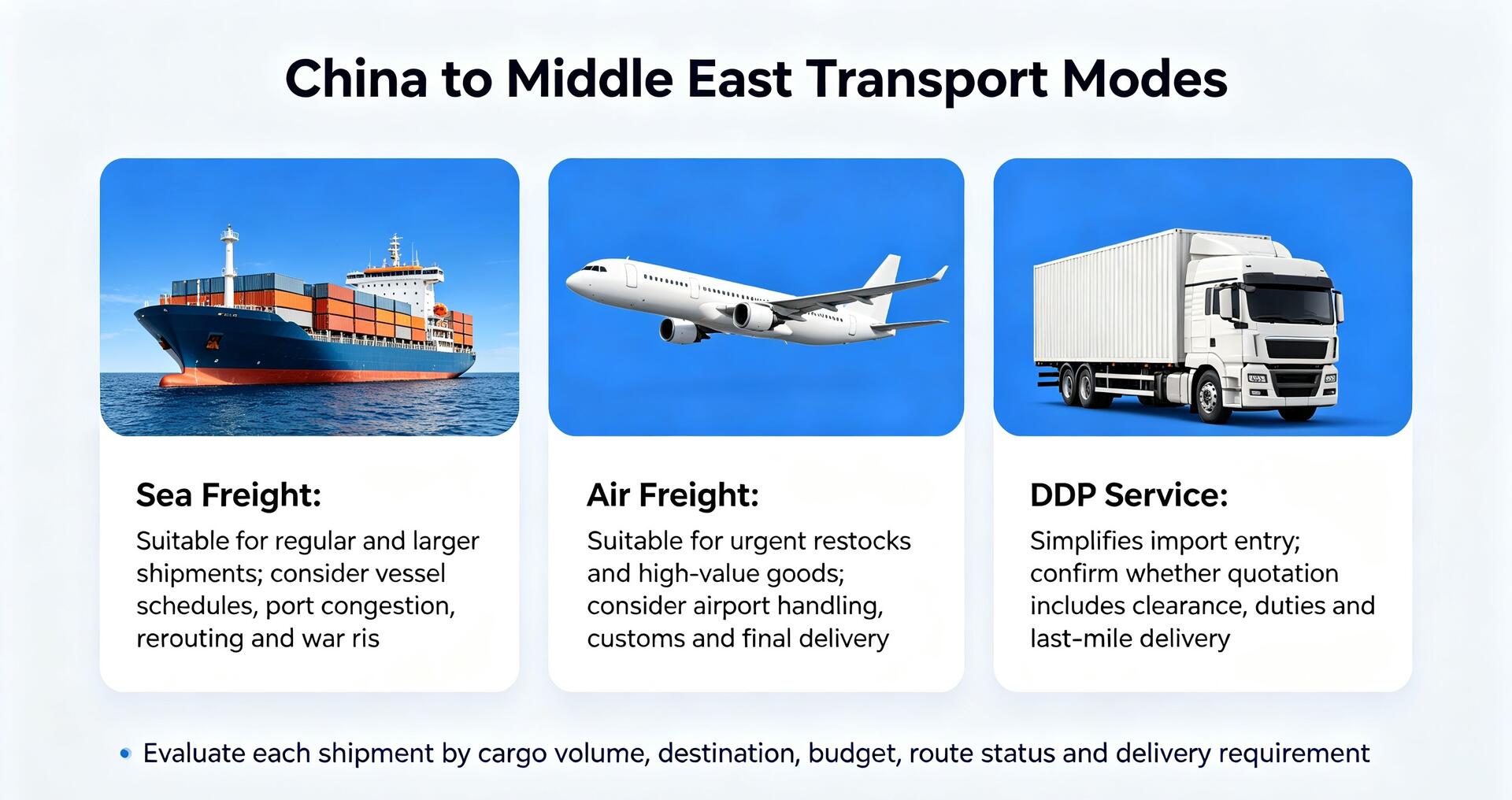
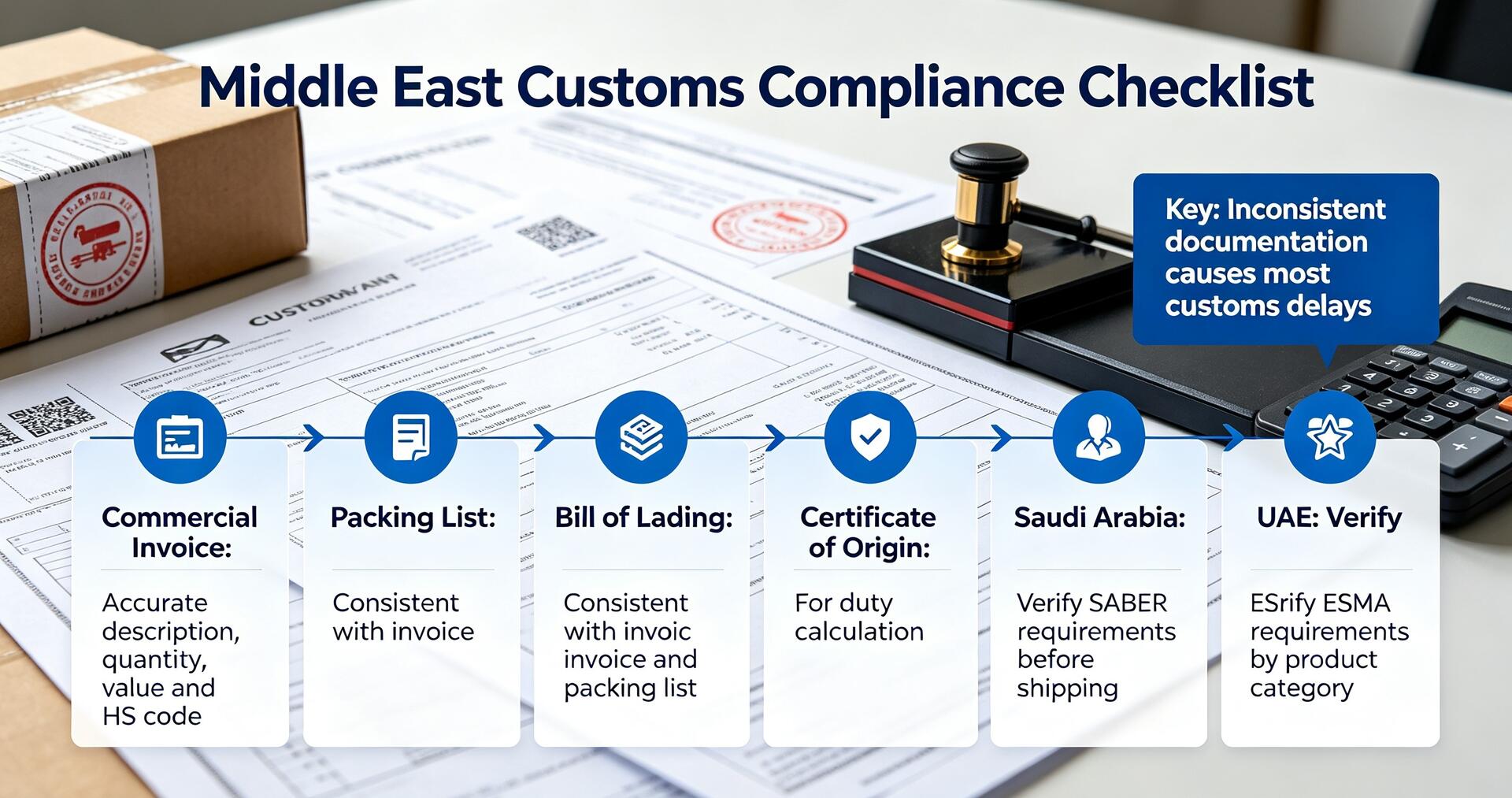
Shenzhen, Guangdong Sep 24, 2026 (Issuewire.com) - Planning shipping from China to the Middle East (https://www.transworldcn.com/middle-east/) means balancing transport cost, delivery time, and destination compliance. Saudi Arabia's Vision 2030 projects and demand across the UAE, Qatar, and the Gulf create opportunities, but route disruption can change both schedules and landed costs. TransWorld (https://www.transworldcn.com/About-us/) examines these decisions through five stages: choosing a service, understanding disruption, budgeting surcharges, preparing customs documents, and allowing for seasonal pressure. The figures below are benchmarks reported in its source guide, not live freight quotations. Confirm current carrier services, charges and product-specific requirements before booking. Step 1: Choose Your Shipping Method: Sea Freight and Direct FCL Transit Times. Sea freight suits containerized cargo when cost and capacity matter more than speed. The source guide's direct full-container-load, or FCL, estimates are port-to-port figures; they do not represent a complete delivery commitment. From Shenzhen or Yantian: Allow 14-18 days to Jebel Ali, 18-24 days to Dammam, 20-26 days to Jeddah, and 16-20 days to Hamad. From Shanghai or Ningbo: The corresponding estimates are 18-22 days to Jebel Ali, 22-28 days to Dammam, 22-28 days to Jeddah, and 20-24 days to Hamad. From Qingdao or Tianjin: The estimates are 20-24 days to Jebel Ali, 20-25 days to Dammam, 24-30 days to Jeddah, and 22-26 days to Hamad. These route estimates are attributed to SinoShipment in the original guide. It identifies approximately 13-15 cubic meters, or CBM, as an FCL-versus-LCL comparison point. Less-than-container-load shipments require consolidation and deconsolidation, for which the guide allows another 5-10 days. Compare actual quotations rather than treating this volume threshold as a universal rule. Air Freight and Express Courier: Air freight serves urgent, high-value, or time-sensitive cargo. The guide's FreightAmigo comparison gives air freight a 5-8-day transit range and a price benchmark of US$4-7 per kilogram, with high-value shipments of 100-500 kilograms as an example use case. Express courier is presented as a faster parcel option: 2-6 days at US$10-15 per kilogram, suited to smaller parcels and documents. Confirm the shipment's chargeable weight, service coverage, and delivery definition when comparing these figures. DDP: Compared with CIF and FOB, Delivered Duty Paid, or DDP, combines freight, customs clearance, duties, and final delivery within the quoted scope. It can simplify purchasing for an importer who prefers one coordinated arrangement. The original comparison assigns customs clearance and import duties or VAT to the buyer under CIF and FOB. It describes CIF as less convenient with greater exposure to additional port fees, and FOB as a middle option. Under DDP, the agent handles clearance, and duties or VAT are included in the quotation. Obtain written inclusions and exclusions: the source's "zero risk" description of hidden fees should not be treated as an unconditional guarantee. Step 2: Understand Route Disruption. The guide reports that conflict affecting the Strait of Hormuz in April 2026 prompted Mediterranean Shipping Co., Maersk, and CMA CGM to suspend or adjust some Middle East services. It describes container rates rising from approximately US$3,000-4,000 to around US$11,000 and transit extensions of 7-15 days. These are reported disruption examples, not a statement that every shipment has the same cost or delay. Alternative discharge points discussed include Khor Fakkan and Fujairah in the UAE, followed by inland transport. The guide describes congestion and limited onward capacity at these ports. Sohar in Oman is another example for Kuwait-bound cargo, although transshipment and cross-border trucking add complexity. A reported 5,000-ton Chinese steel shipment bound for Kuwait illustrates the issue: discharge at Sohar created onward trucking challenges across multiple countries. The example is not identified as a TransWorld customer shipment. Confirm the operational route, discharge port, border arrangements, and onward capacity for the booking concerned. Step 3: Build a Complete Cost Estimate Freight Benchmarks. The original guide attributes these April 2026 figures to FreightAmigo: China to Jebel Ali, 20-foot FCL: US$2,350-3,250. China to Jebel Ali, 40-foot FCL: US$2,800-3,950. China to Dammam or Jeddah, 20-foot FCL: US$1,700-4,200. China to the UAE, LCL: US$120-180 per CBM. These are base comparisons. A shipment-specific quote must identify which local charges, surcharges, duties, and delivery services it includes. Surcharges and a Worked Example: The guide highlights the Bunker Adjustment Factor, which fluctuates with fuel prices; Peak Season Surcharge, particularly around Ramadan and Chinese New Year; War Risk Surcharge; and Low Sulphur Surcharge. Its war-risk example is US$3,000-5,000 per container. For a Shanghai-to-Jebel-Ali shipment, its example attributed to Jwview combines US$3,000-4,000 in ocean freight, US$3,000-5,000 in war-risk charges, and US$500-1,000 in other surcharges. The resulting total is US$6,500-10,000. The calculation illustrates how additions can materially change the base price; it is not a guaranteed current offer. Step 4: Prepare Customs Clearance. Keep the Documents Consistent. The commercial invoice should identify the product, quantity, value, and HS code clearly. The packing list and bill of lading should agree with the invoice and with each other. The guide also identifies a certificate of origin and, for certain destinations, pre-shipment inspection documentation. Avoid vague descriptions and conflicting quantities or values. Documentation preparation should happen before dispatch, not after the cargo reaches its destination. Saudi Arabia: The source guide emphasizes SABER electronic certification and reports a 15% VAT rate. It uses broad language about mandatory certification and cargo rejection. Importers should confirm the applicable product and shipment requirements, together with tax treatment, before shipping; the guide directs readers to ZATCA, the Zakat, Tax and Customs Authority. United Arab Emirates Jebel Ali and Khalifa Port are the principal UAE gateways discussed. The guide lists a standard VAT of 5%, a duty of 5% on most general cargo, and ESMA-related certification for certain product categories. Confirm classification, applicable requirements, and tax treatment for the actual shipment rather than applying these general figures indiscriminately. Iran: The guide identifies Bandar Abbas as a gateway for steel, machinery, chemicals, and consumer goods. It stresses pre-shipment inspection, consistency with the commercial invoice, and coordination with a licensed local customs broker, known as a Tarkhis Kar. It also discusses sanctions-related banking and vessel restrictions, mentioning RMB, AED, and EUR payment arrangements. Those references do not establish that a transaction is permitted. Confirm the shipment's restrictions and the carrier's protection-and-indemnity coverage with the relevant professionals before proceeding. Step 5: Allow for Seasonal Pressure. Ramadan may involve shorter working hours and congestion; its dates follow the Islamic calendar. Chinese New Year brings factory closures and tight capacity, while the guide associates early-October Golden Week with port congestion. Hajj can create additional Saudi border scrutiny, with timing varying annually. The guide recommends booking 2-3 weeks ahead during peak periods and, where practicable, avoiding the two weeks immediately before Ramadan. Confirm the actual calendar and operating arrangements for the planned shipping year. Frequently Asked Questions: How long should an importer allow? Use the specific origin-and-destination estimate. The detailed FCL figures above span 14-30 days port-to-port; the source separately allows 5-10 additional days for LCL handling and reports disruption extensions of 7-15 days. Air and express should be checked against the selected service. Does a low base rate mean a low landed cost? Not necessarily. War-risk charges, other surcharges, clearance, duties, and final delivery can change the overall bill substantially. Compare quotations using the same scope, not just the ocean-freight line. What is the practical difference between DDP and CIF? The guide's comparison places destination clearance and duties with the buyer under CIF, while a DDP quote includes those services within its stated scope. Confirm exclusions, responsibility, and delivery coverage in writing. What deserves attention before a Saudi Arabia shipment? Check the commercial invoice, packing list, bill of lading, certificate of origin, product classification, and applicable SABER requirements. The documents should describe the same cargo consistently. Plan the Shipment Before Booking. A workable Middle East shipping plan brings together a confirmed route, appropriate transport mode, complete cost breakdown, and destination-specific documentation. Early booking and explicit responsibility for clearance and delivery help turn a headline freight rate into a usable shipment plan. For information about routes and shipment planning, visit the TransWorld official website (https://www.transworldcn.com/).
Source :Shenzhen Transworld Supply Chain Co., LTD.
This article was originally published by IssueWire. Read the original article here.
YOUR NEWS, OUR NETWORK.
Do you have Great News you want to tell the world?
Be it updates about your business or your community, you can make sure that it’s heard by submitting your story to our network reaching hundreds of news sites across 6 verticals.